
Bounce House Safety and Setup
Practical care guidance on surface, anchoring, weather, and supervision — not legal advice, just what to actually check.
By The Vendor Lineup Editorial Team · Published
This is practical care guidance for setting up and supervising a bounce house at a Houston party — it isn't legal advice, and it doesn't replace your specific rental company's safety requirements. Every vendor has their own rules for weight limits, weather thresholds, and anchoring, and those requirements always take priority over general guidance like this. Ask your rental company directly for their full safety sheet before the event and read it.
Surface matters more than people assume
Grass is the standard surface for a reason — it gives some cushion and lets stakes anchor properly. If you're setting up on concrete, a driveway, or a patio, ask your vendor whether they can anchor safely on that surface; many use sandbags or water weights instead of stakes for hard surfaces, but not every unit or every vendor offers that option. Never assume a hard-surface setup is fine without confirming it with the company bringing the equipment.
Check the ground itself before setup, too — Houston clay soil can shift after heavy rain, and a spot that looks solid can be softer underneath than it appears. Point out any low spots, sprinkler heads, or recent digging to the setup crew before they stake anything down.
Weather rules that actually apply in Houston
Wind is the biggest weather risk for inflatables, more than most people expect. Most vendors set a maximum wind speed for safe operation, often somewhere in the 15-20 mph range, and expect the unit to be deflated and guests off it above that threshold — ask your specific vendor what their number is and who makes the call to shut it down if wind picks up during the party. Houston's spring and summer storms can bring sudden gusts well before rain even starts, so don't wait for visible rain to check wind conditions.
Heat is the other real factor. An inflatable sitting in direct Houston sun can get hot enough on the surface to be uncomfortable or unsafe for bare skin well before the air temperature alone would suggest a problem. If there's no natural shade over the unit, ask your vendor about a shade cover option, and check the surface temperature by hand before kids get on it during peak afternoon sun.
Supervision is the part equipment can't do for you
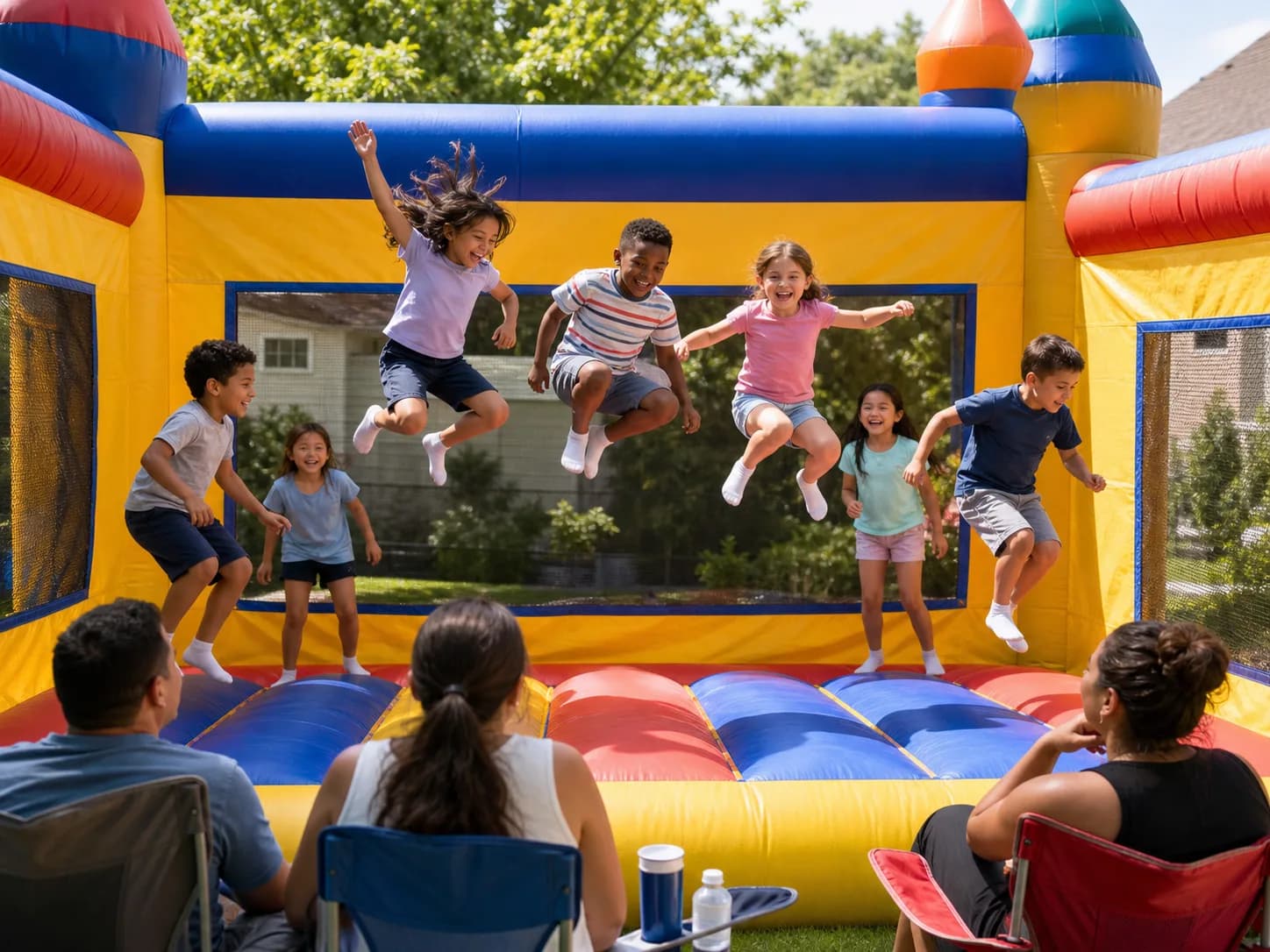
A stationary rental company can set up equipment safely, but active supervision during the party is on the host and any parents present — no inflatable is safe to leave fully unattended with kids on it. Keep an adult watching the unit specifically, not just generally present at the party, and enforce basic rules: no shoes, limit the number of kids on at once based on the unit's stated capacity, and separate age groups if there's a wide range (a 4-year-old and a 10-year-old bouncing together is a common cause of minor injuries).
Check your vendor's stated weight and headcount limits before the party and actually enforce them — these numbers exist because the equipment is rated for them, not as a suggestion.
Before you sign anything
Ask your rental company directly: what's their wind and weather policy, what surface types they can anchor on, what their weight/headcount limit is for the specific unit, and what their process is if something needs to be shut down mid-party. A vendor who answers these clearly and specifically, rather than vaguely, is generally the more careful one to work with. Check your rental's own requirements and any local ordinance that might apply to your setup — this guidance is a starting point, not the final word.
Frequently asked questions
- Can a bounce house be set up on concrete or a patio?
- Sometimes, but it depends on the vendor and unit — hard surfaces usually need sandbags or water weights instead of stakes, and not every vendor offers that. Confirm directly with your rental company before assuming a hard-surface setup is an option.
- What wind speed is too much for a bounce house?
- This varies by vendor, but many set a threshold somewhere around 15-20 mph, above which the unit should be deflated and cleared. Ask your specific vendor for their exact number and who's responsible for making the call during the event.
- Does a bounce house need constant adult supervision?
- Yes — equipment setup and anchoring is the vendor's job, but watching kids while they're on it is on the host and any parents present. No inflatable is safe to leave unsupervised with kids on it, regardless of how well it's anchored.
- How hot can a bounce house surface get in Houston summer?
- An inflatable sitting in direct sun can get uncomfortably or unsafely hot to the touch well before the air temperature alone suggests a problem. Check the surface by hand before kids get on it during peak afternoon sun, and ask your vendor about shade cover options.
Ready to find vendors?
Run a bounce houses & inflatables business?
Join Greater Houston’s marketplace for bounce houses & inflatables — free to list.